
Image retrieved from Sportsnet
When the Olympic Games approach and NHL players become eligible for international competition, the conversation around the Toronto Maple Leafs shifts beyond the regular season. Auston Matthews, representing Team USA or Morgan Rielly skating for Team Canada, and William Nylander and Oliver Ekman-Larsson suiting up for Sweden, all extend the Leafs brand onto a global stage.
Olympic participation is often framed as an individual honour, but it also reshapes how players and franchises are perceived. Media narratives begin to position players not only as Leafs contributors but as national symbols. As international hockey returns to the spotlight, it is worth asking what global representation means for the identity, expectations, and brand of one of the NHL’s most scrutinized teams.
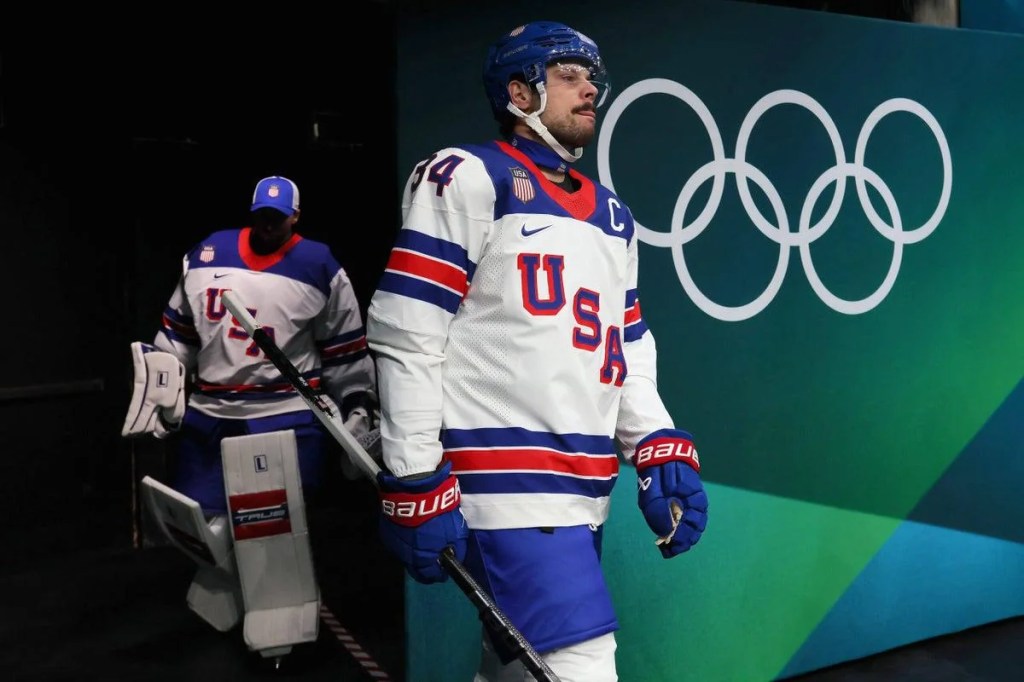
Image retrieved from NY Times
From Franchise Star to National Figure
When Auston Matthews is discussed in Olympic projections for Team USA, the framing often shifts from Leafs captain to cornerstone of American hockey. Coverage on the official NHL site has explored Matthews’ role in shaping the future of USA Hockey and how he fits into Olympic roster construction.
In this context, Matthews is not being evaluated strictly on Toronto’s playoff history. Instead, he is framed as a symbol of American offensive talent. The narrative broadens. Leadership becomes national rather than local.
Similarly, Canadian coverage of Morgan Rielly during Olympic roster debates often emphasizes national pride and international pedigree. Sportsnet’s analysis on projected Team Canada Olympic roster discussions highlights how players are evaluated through a different lens when the Maple Leaf crest replaces the Leafs logo.
TSN has also examined Olympic roster debates, focusing on positional depth and chemistry rather than franchise expectations.
The tone shifts. During the NHL season, scrutiny often centres on playoff performance. In Olympic discussion, the emphasis becomes contribution to a collective national roster.
Nylander and International Identity
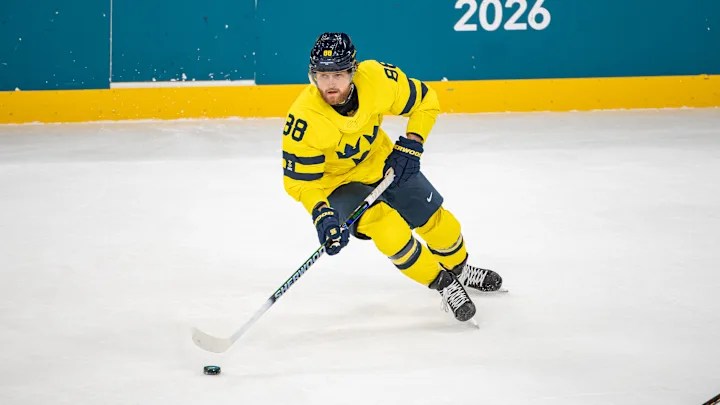
Image retrieved from EditorInLeaf
William Nylander’s international representation adds another dimension. When playing for Sweden, he is frequently framed as a technically refined forward shaped by international competition. Coverage from the International Ice Hockey Federation has discussed Nylander’s role and impact in global tournaments.
For the Leafs brand, this reinforces international relevance. Nylander’s performance abroad connects Toronto to European audiences and strengthens the perception of the franchise as globally influential rather than regionally defined.
The Branding Effect

Image retrieved from @mapleleafs on Instagram
Olympic participation extends visibility beyond NHL markets. When multiple Leafs players appear on national rosters, the organization benefits from international broadcast exposure and global commentary. This reinforces themes explored in my previous post on media framing in high-pressure markets, where I examined how narrative context shapes perception. It also connects to my earlier discussion on leadership expectations surrounding Auston Matthews and how those narratives shift depending on the setting.
International play creates a new context. Players who may be framed critically during the NHL season are often portrayed more affirmatively in Olympic coverage.
To illustrate how performance itself contributes to these narratives, consider Auston Matthews’ international play with the United States men’s national junior ice hockey team at the 2015 IIHF World Junior Championship. On that stage, Matthews was not framed as the face of the Toronto Maple Leafs, but as a rising symbol of American hockey.
Auston Matthews International Highlights
A highlight compilation from the 2015 World Juniors showcases his offensive creativity, puck control, and scoring ability in an international setting:
Video retrieved from Bigwhite06 on YouTube
When viewers watch clips like these, the focus centers on skill and execution rather than playoff history or market pressure. The narrative shifts from franchise expectations to national potential. Visual media plays a powerful role in shaping perception, and international tournaments often strip away the weight of Toronto’s scrutiny.
Franchise or National Contributor?
One of the most interesting shifts is how responsibility is framed. In Toronto coverage, Matthews may be described as the primary driver of offense. In Olympic conversation, he becomes one elite contributor among many. The pressure disperses.
The same applies to Rielly. Domestically, narratives often return to consistency and postseason results. Internationally, selection itself signals validation. The framing becomes achievement based rather than expectation driven.
Even discussions of Matthews’ historic scoring milestone, widely covered in outlets such as Sports Illustrated, take on a different meaning when viewed through an Olympic lens. Franchise legacy and national representation intersect, but they are not identical.
Why this Matters
Olympic representation strengthens the Maple Leafs brand by aligning it with international excellence. At the same time, it complicates narratives that focus solely on playoff outcomes. It reminds audiences that player identity is layered and contextual.
As Olympic rosters take shape, it is worth asking whether we evaluate these players differently depending on the jersey they wear.
How does international competition shape your perception of Leafs players? Do you view them differently when they represent their country rather than Toronto? Share your perspective in the comments and consider how media framing changes depending on the stage.
 Behind the Blue Line
Leave a comment