
Image retrieved @Blogto
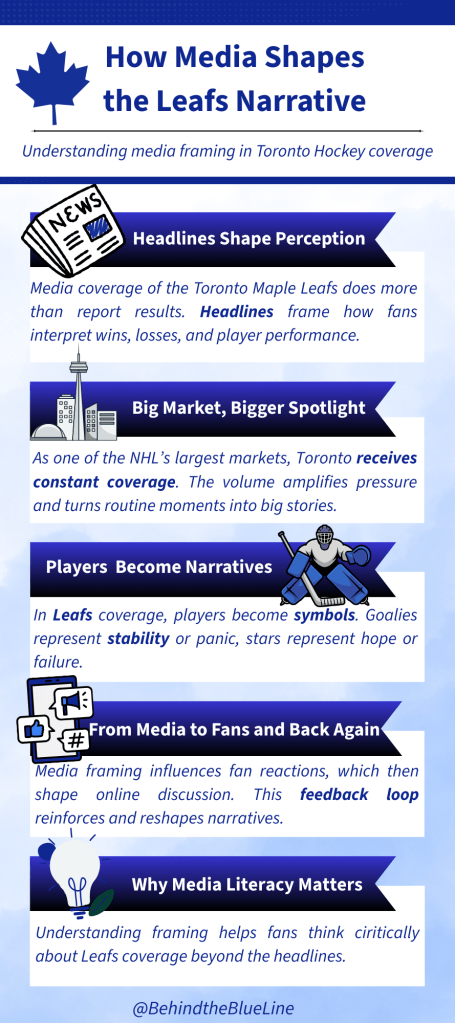
In the fast-paced world of NHL hockey, the Toronto Maple Leafs are always under the microscope. Every goal, save, or lineup change is analyzed by media outlets, ultimately shaping the stories fans hear and repeat. Headlines about Leafs players, from Auston Matthews’ milestone moments to goalie rotations and roster moves, do more than report facts. They frame a narrative that influences perception. Media framing turns routine games into debates about pressure, expectations, and even team identity.
For fans who follow the Maple Leafs closely, understanding how media narratives tell these stories matters now more than ever. It is not just about stats or wins and losses. It is about interpreting the messages behind headlines and seeing how Toronto sports coverage affects the conversation surrounding the team, its players, and the broader NHL media landscape.
Headlines as Narrative Tools
A recent Reuters report on Matthews highlighted him becoming the Leafs’ all‑time leading goal scorer, a milestone that naturally draws attention and praise. In contrast, coverage of the team’s setbacks often emphasizes pressure and frustration, keeping a different storyline alive in the public sphere. Fans and critics alike notice how stories about Leafs performance loop back to themes of expectation and scrutiny, even when the team is showing progress.

Image retrieved @CityNews
Media framing is not limited to game recaps. Coverage can spill into perceptions of bias. Some fans argue that national outlets, such as TSN, amplify coverage of the Leafs because Toronto is a major market. Internal biases or market pressures influence which stories are repeated and why certain narratives stick. Even minor roster changes, like Joseph Woll’s return from leave or goalie rotations, spark debates about readiness and team depth.

Image retrieved @DailyFaceoff
Criticism vs. Context: Media Literacy Matters
Understanding how and why certain headlines are written allows readers to question rather than absorb narratives passively. After a decisive playoff loss, Florida Panthers forward Matthew Tkachuk openly criticized how Leafs media covers the team, suggesting it creates psychological pressure on players. Fan forums, like Reddit Leafs sub, show long threads debating whether media is too harsh or whether some narratives are unfair.
Another example: a recent TSN article highlighted how the Maple Leafs relied on Joseph Woll after Anthony Stolarz’s injury, sparking discussion about goalie rotations, team performance, and how the media frames these decisions
Video Retrieved from @NHL on YouTube
Watch below: Maple Leafs 2025‑26 every goal highlights — a perfect example of how the media frames the team’s story through highlights, emphasizing scoring and star players.
Expanding the Conversation
To see how media framing plays out in other stories, check out previous posts on this blog:
Positive or negative framing affects fan discussions, player perception, and media coverage of trades, injuries, and coaching decisions. Media literacy helps fans look beyond the headlines and engage critically with the stories they read. This season, narratives around Matthews, Woll, and Tavares show that how the Leafs are covered can shape expectations, pressure, and fan conversation just as much as what happens on the ice.
Why This Matters Now
This season has been a mix of highs and lows. Milestones, tactical adjustments, and inconsistent results are framed in countless ways by sports media, shaping fan perception and discussion. Whether the topic is Matthews’ scoring, the goalie tandem, or playoff expectations, the narratives constructed by media are more than commentary; they influence how the team is understood in real time.
Next time you see a Leafs headline, think critically: What story is being told? How is the narrative framed? Comment below with the headline that caught your eye and what you think it really says about the team this season.
 Behind the Blue Line
Leave a comment